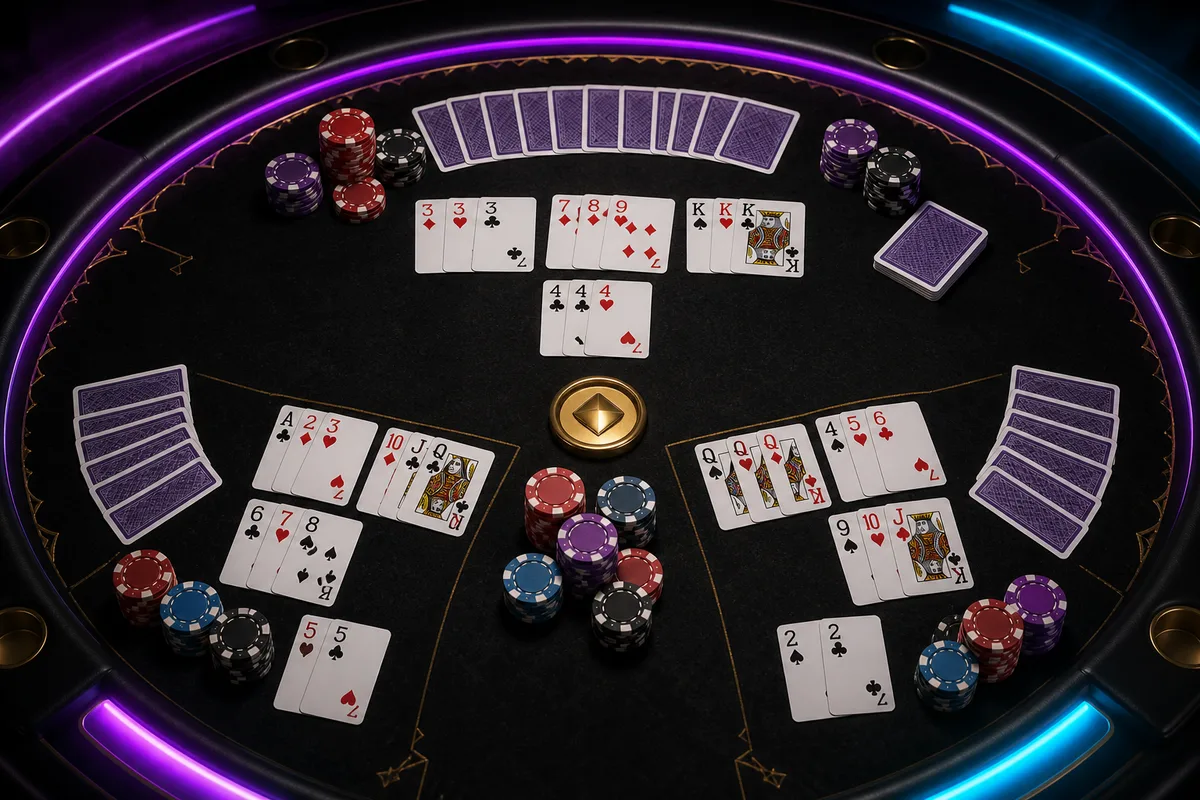
Tongits melds and sapaw
Tongits melds are sets and same-suit runs; sapaw extends them, cuts deadwood, and can block a fight for a full rotation, legality first, fancy timing second.
Sets and runs
A set is three or four cards of the same rank, such as 7♣7♦7♠. A run is three or more consecutive cards in one suit, such as 5♠6♠7♠. On the Gabay teaching sheet ace is low: A-2-3 is legal and Q-K-A is not. Face cards deserve greedy melding because each leftover jack, queen, or king is ten deadwood points when someone fights.
Expose only legal length. Two pair is not a meld. Mixed-suit sequences are not runs. Four of a kind is still a set. If the UI refuses a drag-and-drop, trust the UI over a group-chat screenshot cropped from another app.
Sapaw as cleanup and as block
Sapaw means laying off one or more cards onto any legal exposed meld, yours or an opponent’s. Extending 5-6-7♠ with 8♠, or completing a three-of-a-kind to four, both remove points from your hand immediately. That is the cleanup half every beginner eventually learns.
The strategic half matters more: sapaw on an opponent’s meld often blocks their Fight call until a full rotation passes. Use that when their hand count looks thin and the stock is shrinking. Players who never sapaw donate face-card points and also gift free fight windows.
When to expose versus when to wait
Priority one is avoid sunog: get one meld down. Priority two is deny easy chows; do not expose a run that hands neighbours obvious extensions if you can wait a single draw without risking a stock-out. Priority three is deadwood math before any fight button lights up.
Some digital builds allow concealed melds kept in hand. They preserve flexibility because opponents cannot sapaw what they cannot see, but they can fail sunog checks if nothing is exposed at showdown. When the stock is short or you are new, expose. The protection is worth more than the secret.
Worked mini-examples
- Table shows 8♦9♦10♦ and you hold 7♦, sapaw the seven to extend the run and dump points; you may also block a fight.
- Opponent shows K-K-K; you hold the fourth king, sapaw blocks their next fight window and removes ten deadwood in one tap.
- You hold Q♥ K♥ A♥; that is not a run on ace-low sheets; rebuild toward A-2-3 or dump the faces before a fight.
- You hold 9♠9♥9♦9♣, exposing all four is legal as a set; holding one back only makes sense if your sheet’s concealment rules are crystal clear.
Reading the table for meld decisions
Exposed melds are public information. If both opponents already show hearts runs, dumping a heart is riskier. If nobody has touched sevens, a lone seven in your hand is a candidate for sapaw later rather than a panic discard on turn two.
Pair this page with scoring so you know what each leftover card costs, and with rules so fight blocks do not surprise you mid-pot.
Next steps
Get legality right before you chase big Tongits calls. Timing for sapaw blocks: sapaw rules and timing. When to open your first meld: sunog guide. Discard reading: Tongits strategy. Real-money play is for adults 21+ only.