Pai Gow Poker basics for Philippine players
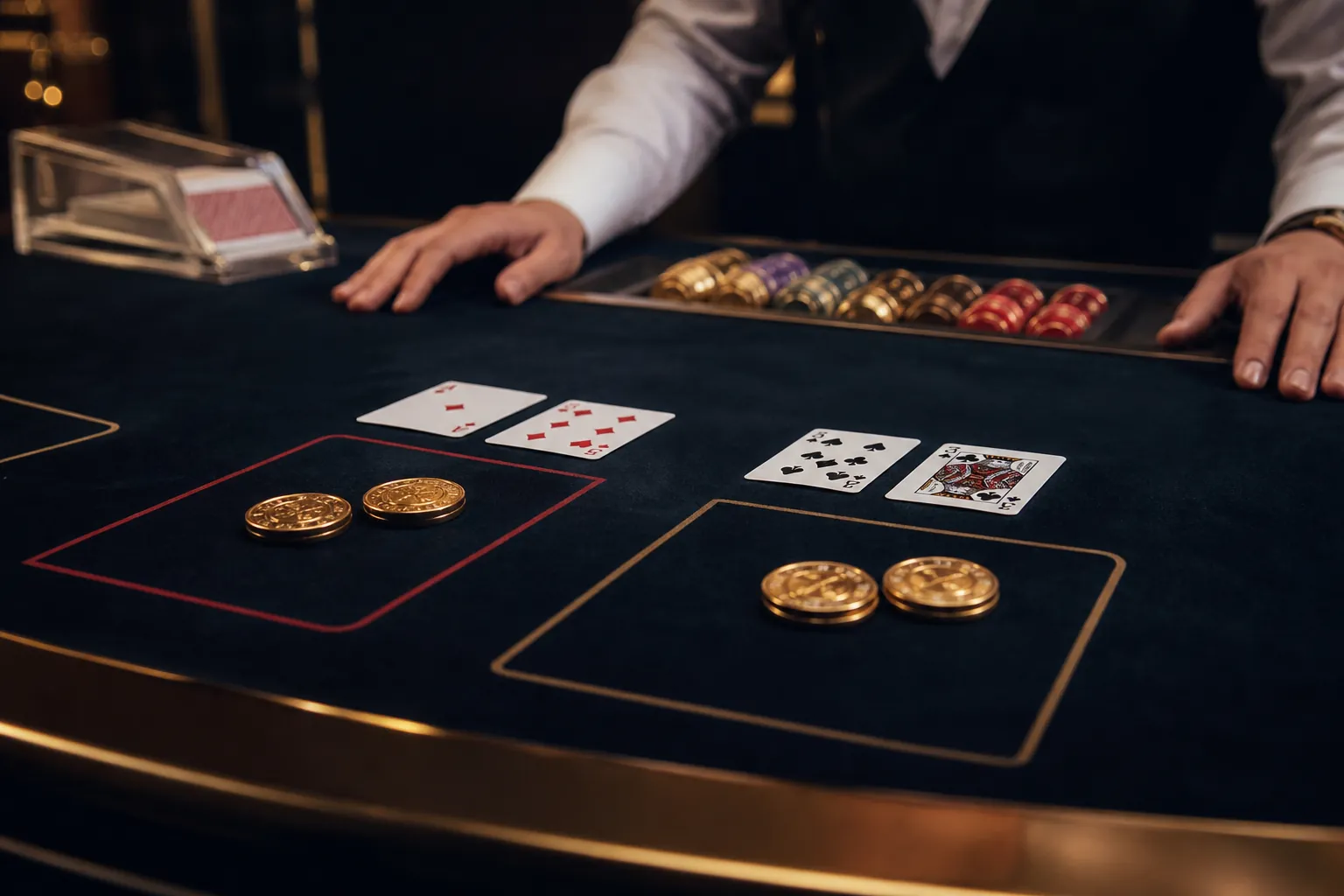
Pai Gow Poker deals you seven cards. You set a five-card high hand and a two-card low hand; the high hand must outrank the low or you foul and usually lose. You need both hands to beat the dealer to win even money (often minus commission). Win one and lose one is typically a push. That two-hand compare, not Texas Hold’em betting, is the whole game.
53-card deck and the semi-wild Joker
Standard Pai Gow Poker uses 52 cards plus one Joker. The Joker is not fully wild: it counts as an Ace, or it completes a straight or flush when that helps the hand. Five Aces (four Aces + Joker) is the top five-card hand. If you expected Tongits-style wild melds, reset; this is a casino set-and-compare product. See also video poker basics for another poker-ranking game.
Gamer Gabay explains rules only.
Seven cards → high five + low two (no foul)
After the ante, each seat and the banker/dealer receive seven cards. You arrange them into a five-card “high” (rear/back) hand and a two-card “low” (front) hand. Poker rankings apply to the five-card hand. The two-card hand is either a pair or high-card vs high-card (Ace high).
The non-negotiable rule: the five-card hand must be higher in poker rank than the two-card hand. If your front pair of Aces somehow outranks your five-card hand, that is a foul. Most tables take the entire bet as a loss when you foul; the dealer never has to beat you.
| Piece | What it is | Common mistake |
|---|---|---|
| High / rear | Five-card poker hand | Parking all strength in front |
| Low / front | Two-card hand | Making front stronger than rear |
| Foul | Low outranks high | Auto-loss on many sheets |
| House Way | Casino’s default set | Ignoring it when unsure |
Both hands must win, copy and commission
Settlement compares your high to the dealer’s high and your low to the dealer’s low. Win both → you win the ante (often 1:1 minus a 5% commission on the win). Lose both → you lose. Win one and lose one → push (stake returned). When a hand ties exactly in rank (“copy”), the banker/dealer typically wins that hand; so a copy on one side while you win the other can still be a full loss, depending on sheet language. Always read whether copies favor the house.
| Your result vs dealer | Typical settle |
|---|---|
| Beat both hands | Win ante (often −5% commission) |
| Lose both hands | Lose ante |
| Split (one each) | Push |
| Copy on a hand | Banker usually wins that hand |
House Way: the beginner’s set button
Casinos publish a House Way: a fixed recipe for how the house sets two-pair, three-of-a-kind, straights with pairs, and so on. Live dealers will set your cards House Way if you ask. Online lobbies usually offer a House Way button. Using it prevents fouls and keeps you near the published house edge; freestyle setting without a chart is how beginners gift the table.
You may deviate later, but night one is House Way only. PokerNews-style tips (“always split Aces–Kings in front when…”) belong after you can recite the foul rule without hesitation.
- Ask for House Way whenever the set feels ambiguous
- Never leave a low hand that outranks the high hand
- Confirm commission % and copy rule in the help file before raising stakes
- Side bets (Fortune / progressive) are separate products with steeper edges
PH lobby notes: banking, pace and Tongits habits
Some live products rotate a player-banker; most online RNG versions keep the house as banker every hand. Dice cups that choose who is dealt first are theater; they do not change hand math. Filipino players who live in Tongits or Pusoy often over-meld the five-card hand and starve the front. Pai Gow Poker rewards balanced fronts that can beat a dealer’s high-card two, not a single monster rear.
Five setting mistakes that burn the ante
These show up constantly on PH mobile tables with short timers.
- Fouling by putting the only pair in front when the rear becomes junk.
- Assuming a copy is a friendly baccarat-style tie, banker usually takes copies.
- Ignoring commission and thinking even-money means even EV.
- Buying Fortune side bets “for coverage” every hand.
- Chasing after a long push streak, pushes are normal; they are not a debt.
Session limits before the first deal
Cap hands and pesos. Prefer Wi-Fi over flaky mobile data, freezes do not pause settlement. Optional play stays optional; leave when the stop hits.