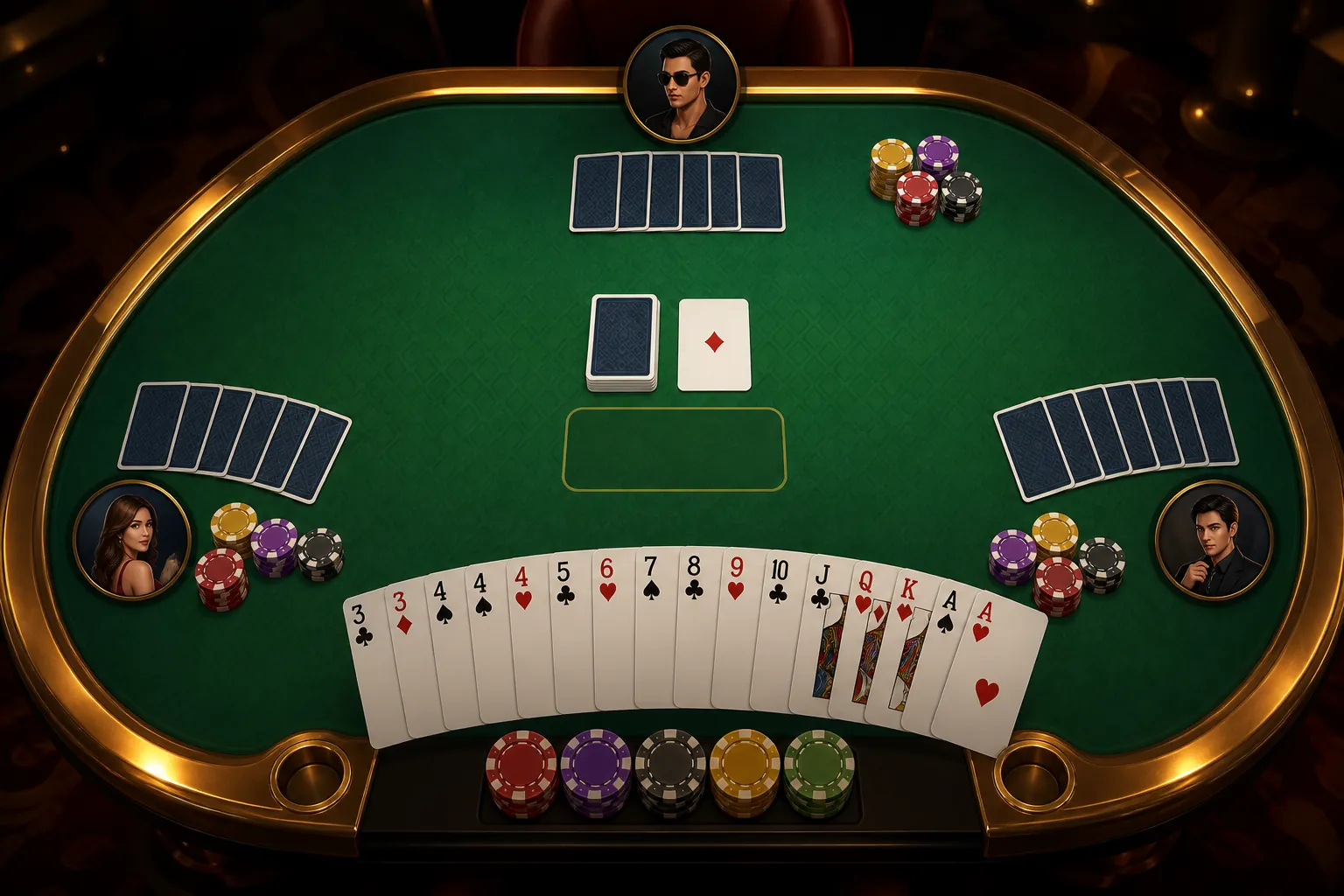
Cuajo (kwaho) rules PH: partnerships, bahay, and the purro call
Cuajo, also spelled kwaho or kuwaho in Kapampangan and Tagalog talk, is a four-player partnership rummy played with a special 112-card Spanish-suited pack. Opposite seats share winnings. The goal is sixteen cards in separate valid combinations (bahay), with kings allowed as single melds, a face-up sowee that shapes scoring, and a purro call when you need one card.
Deck and partnerships (kwaho)
Four players; partners sit opposite. The Cuajo Filipino pack uses cups, coins, swords, and batons with ranks Ace, 3, 4, 5, Jack, Horse, King, four identical copies of each card (112 total). DIY houses build it from four Spanish decks by stripping 2s and 6–9. Deal and play are anticlockwise. More Filipino rules live on Filipino card game rules hub.
Four bahay types + single King
Every card in the final sixteen must sit in exactly one combination:
| Bahay type | What counts | House note |
|---|---|---|
| Set | 3–4 same rank, different suits | Aces allowed in sets only |
| Sequence | Suited 3-4-5 or Jack-Horse-King only | Aces never in runs |
| Secret | Four identical copies of one card | Immediate side payout when laid |
| Single King | Any King alone is a legal bahay | Kings cannot be discarded |
Deal, sowee, and anticlockwise play
Dealer gets 16; others 15. Next card turns face up as sowee (scoring reference, not drawn into play). Stock sits atop the sowee at right angles so the value stays visible. Dealer discards a non-King to open the discard pile, then play passes right. On your turn: take stock top or previous discard, then discard any non-King.
- Winner of the hand usually deals next
- Never discard a King, illegal in standard Cuajo
- Sowee stays visible for bounit/sowee payment tests later
Secrets and the purro call
Four identical cards may be laid face down as a secret for an immediate side payment from each opponent (partner neither pays nor receives, classic Pagat house uses a small fixed amount; translate to your peso chips). Those cards stay committed. When you need exactly one card after discarding, declare purro and place a King (or a coin token) face up. Other players must then show stock draws; if the shown card completes your hand you may claim “time.” If a later draw breaks your one-card wait, announce you are no longer purro and follow your house’s cool-down showing rules.
- Lay secrets only when you can afford the committed cards.
- Call purro immediately after the discard that leaves you one shy.
- Expose the full sixteen when you win so partners can verify bahay.
- Agree peso chip values for secret and win payments before shuffle.
Bounit, sowee, and porbis scoring sheet for PH houses
Translate Pagat’s cent/dollar examples into your barkada chips before the first deal. Kings of coins often pay more than other kings. Full payment when you draw the bounit yourself usually needs the two cards that “go with” the bounit plus sowee + two that go with sowee; missing conditions reduce the schedule. A porbis win (no kings, or only one king inside a Jack-Horse-King) pays a premium schedule. Genre compare: Tongits vs Pusoy; Tongits remains a different three-player Anglo-deck game, Tongits rules.
Quick check: valid bahay
Sixteen cards, separate combinations, kings legal alone; say it before the first discard.